
Can You Limewash Dated Stone Cladding?
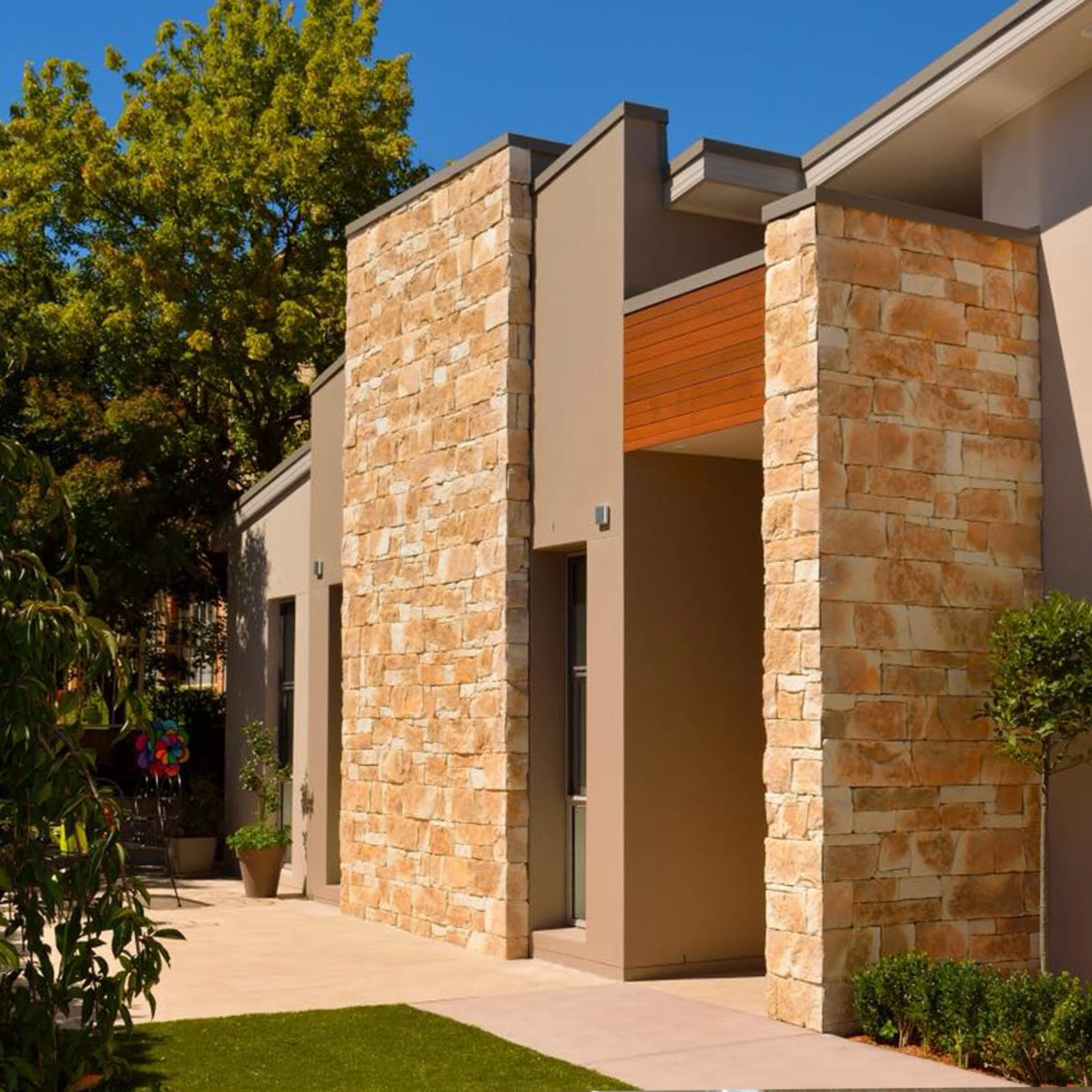
Stone cladding was once seen as a premium architectural feature, particularly throughout many high-end Melbourne homes built in the 80s, 90s and early 2000s.
But today, many of these homes feel visually heavy, overly yellow, orange or brown in tone, and disconnected from the softer, more refined direction modern architecture has moved toward.
Stone cladding was once seen as a premium architectural feature, particularly throughout many high-end Melbourne homes built in the 80s, 90s and early 2000s.
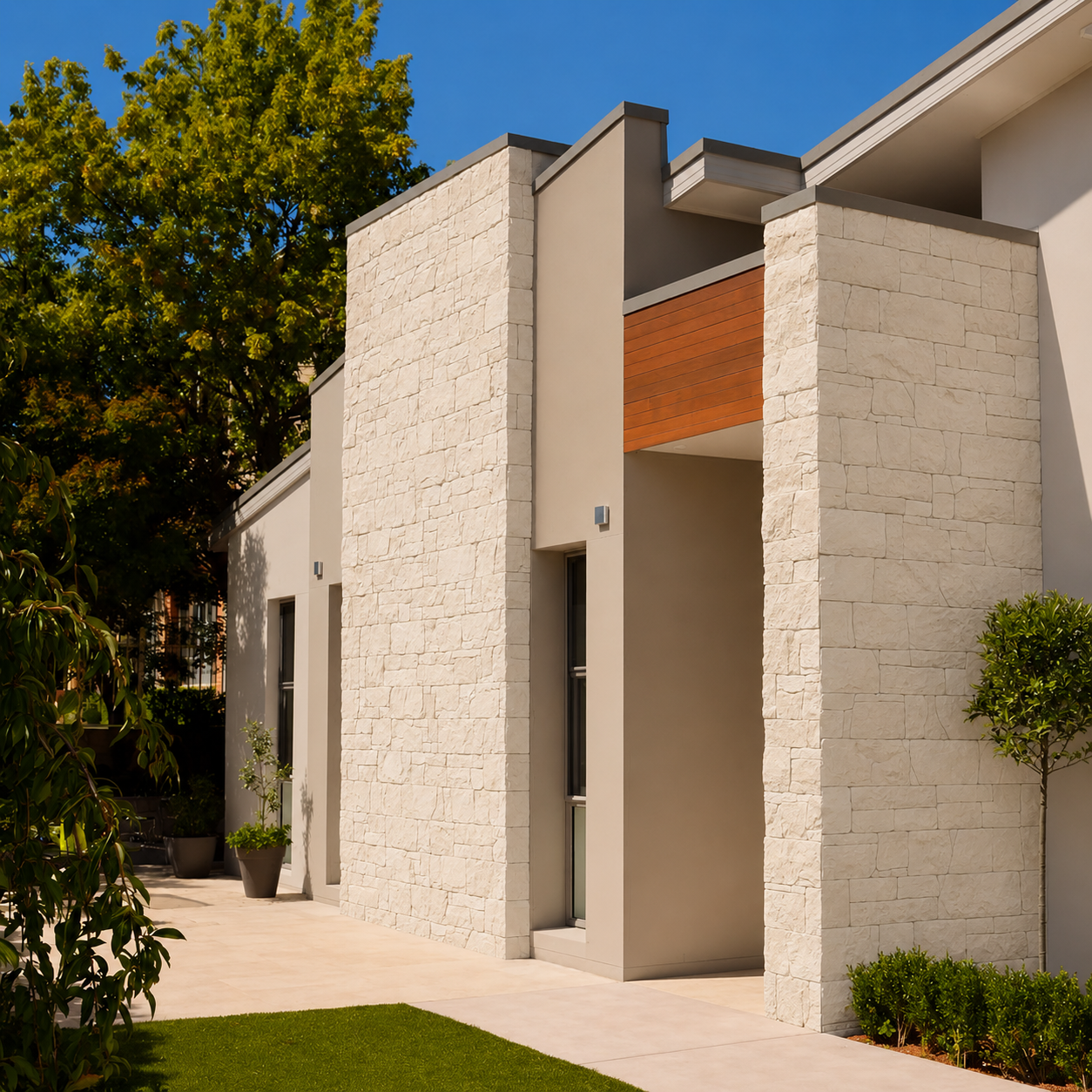
But today, many of these homes feel visually heavy, overly yellow, orange or brown in tone, and disconnected from the softer, more refined direction modern architecture has moved toward.
For homeowners, designers and architects wanting to modernise these homes without completely replacing the stone, limewashing can become a very interesting option.
However, stone cladding projects are also some of the most technically complex limewash applications - particularly when existing sealers or coatings are involved.
Why dated stone cladding can feel difficult to work with
Many older stone-clad homes were designed around:
darker earthy palettes
heavy contrast
warm yellow or orange tones
highly textured façades
While the stone itself is often high quality, the overall visual effect can now feel:
dated
heavy
visually busy
disconnected from contemporary interiors and landscaping
This is especially noticeable when homes undergo:
architectural renovations
kitchen updates
landscaping upgrades
modern window replacements
minimalist interior redesigns
The stone remains - but the aesthetic around it evolves.
Why homeowners are choosing limewash over replacing stone
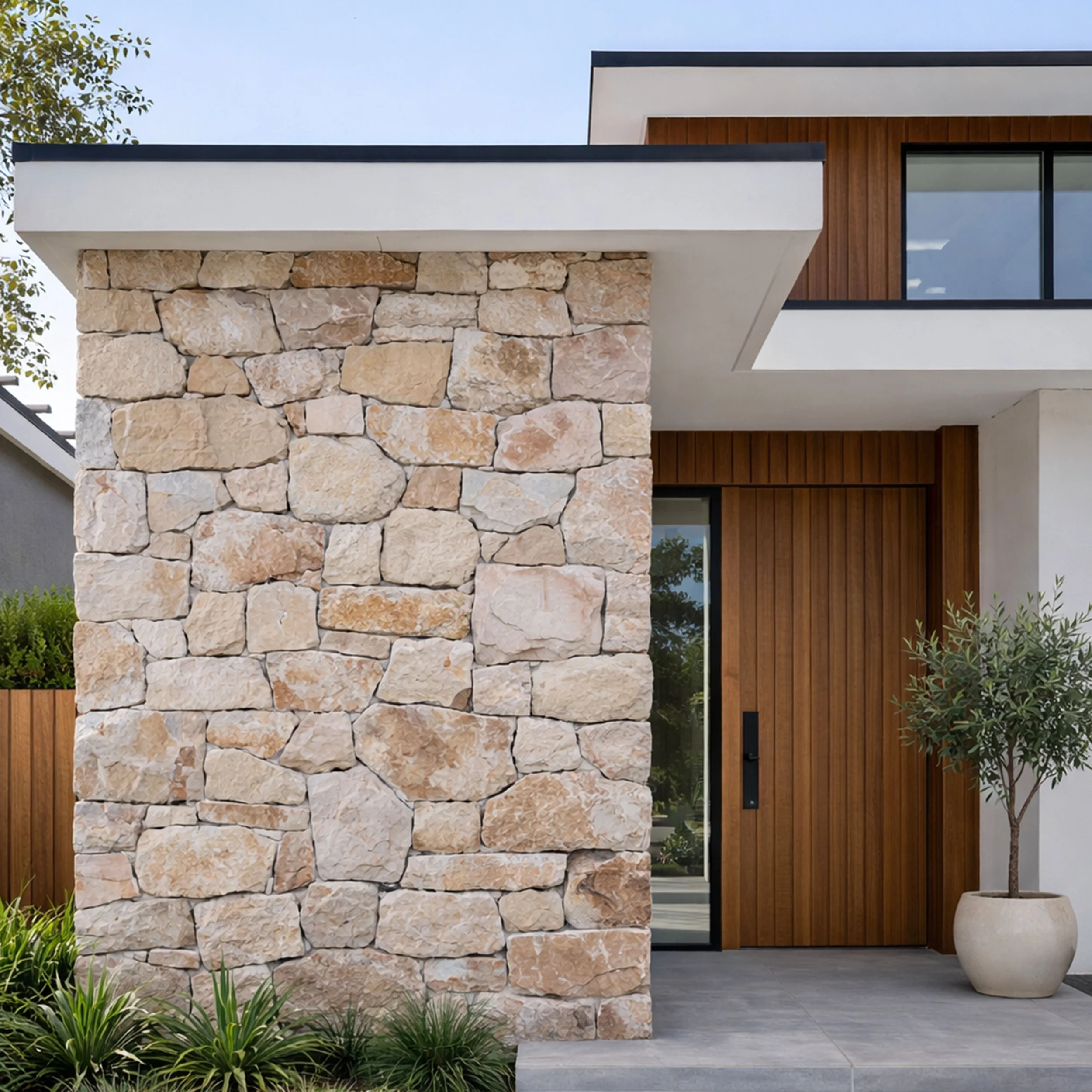
Completely recladding a home in new stone can be extremely expensive.
On larger homes, particularly in areas such as Brighton, Toorak or Mount Macedon, replacement costs can quickly become significant once demolition, disposal, scaffolding, waterproofing and new stone installation are considered.
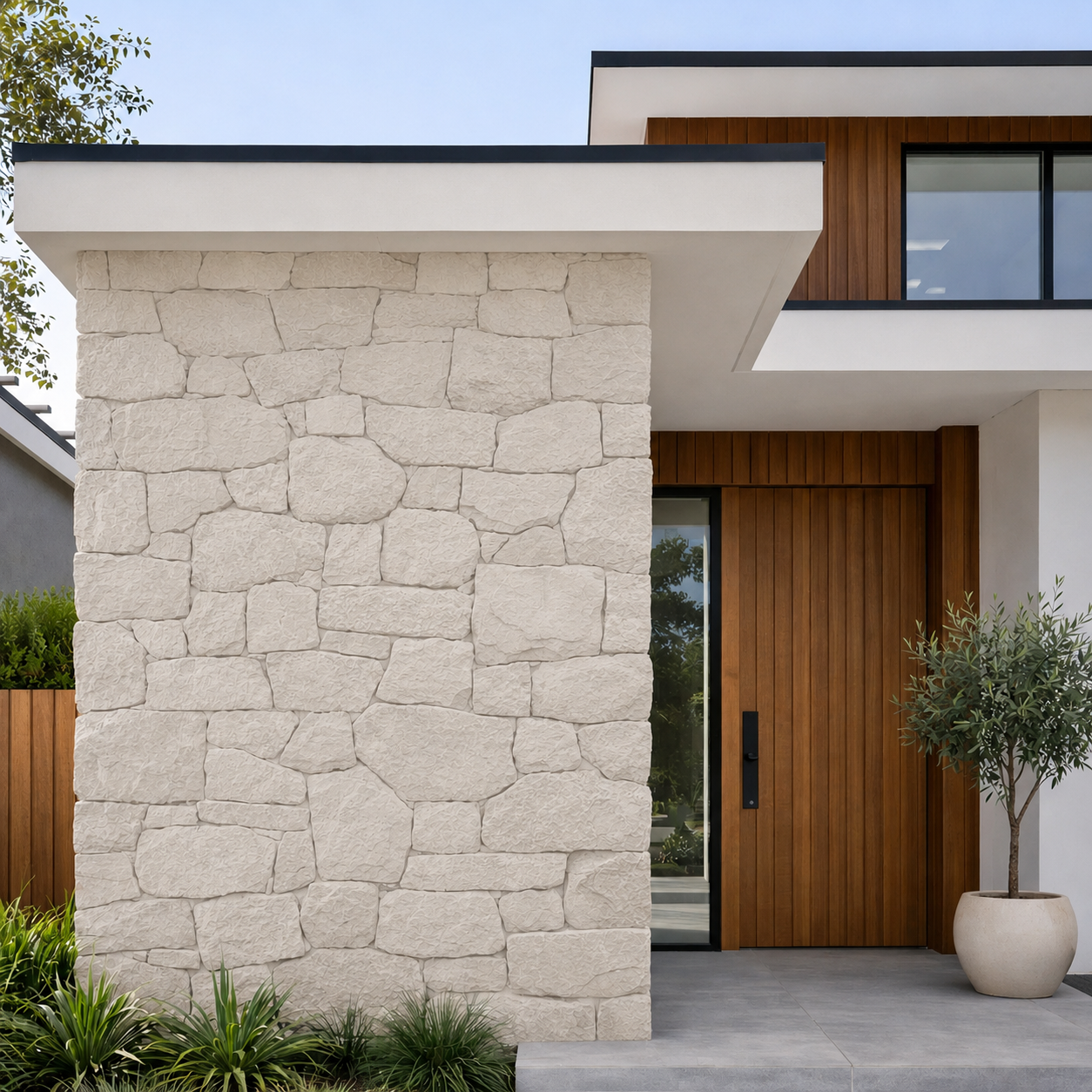
Limewashing offers an alternative approach:
softening the appearance of the existing stone
reducing harsh contrast
modernising the overall palette
retaining texture and natural movement
creating a lighter, more architectural finish
Rather than fighting the stone, limewash works with it.
The texture, depth and natural variation remain visible - but the overall home feels calmer, softer and more cohesive.
The biggest challenge: existing sealers
This is where stone cladding projects become far more complex than standard brick limewashing.
Many stone surfaces have previously been treated with:
penetrating sealers
wet-look sealers
acrylic coatings
waterproofing systems
enhancer products
These coatings dramatically affect:
absorbency
breathability
lime adhesion
final finish consistency
Traditional limewash relies on penetrating porous mineral surfaces.
If the stone has been sealed heavily, the limewash may:
fail to absorb correctly
sit inconsistently on the surface
cure unevenly
develop patchiness
struggle with long-term durability
Because of this, preparation and testing become absolutely critical.
Why testing is essential before proceeding
With stone cladding, no reputable limewash specialist should guarantee a final specification before testing the substrate properly.
A proper assessment may involve:
identifying the existing sealer type
testing absorbency
trial cleaning methods
evaluating coating build-up
checking adhesion
creating sample areas
testing colour and finish appearance
This process helps determine:
whether traditional limewash is suitable
whether partial sealer removal is required
whether an alternative mineral system is needed
how the final finish will behave visually
Every stone substrate behaves differently.
Exterior vs interior stone cladding
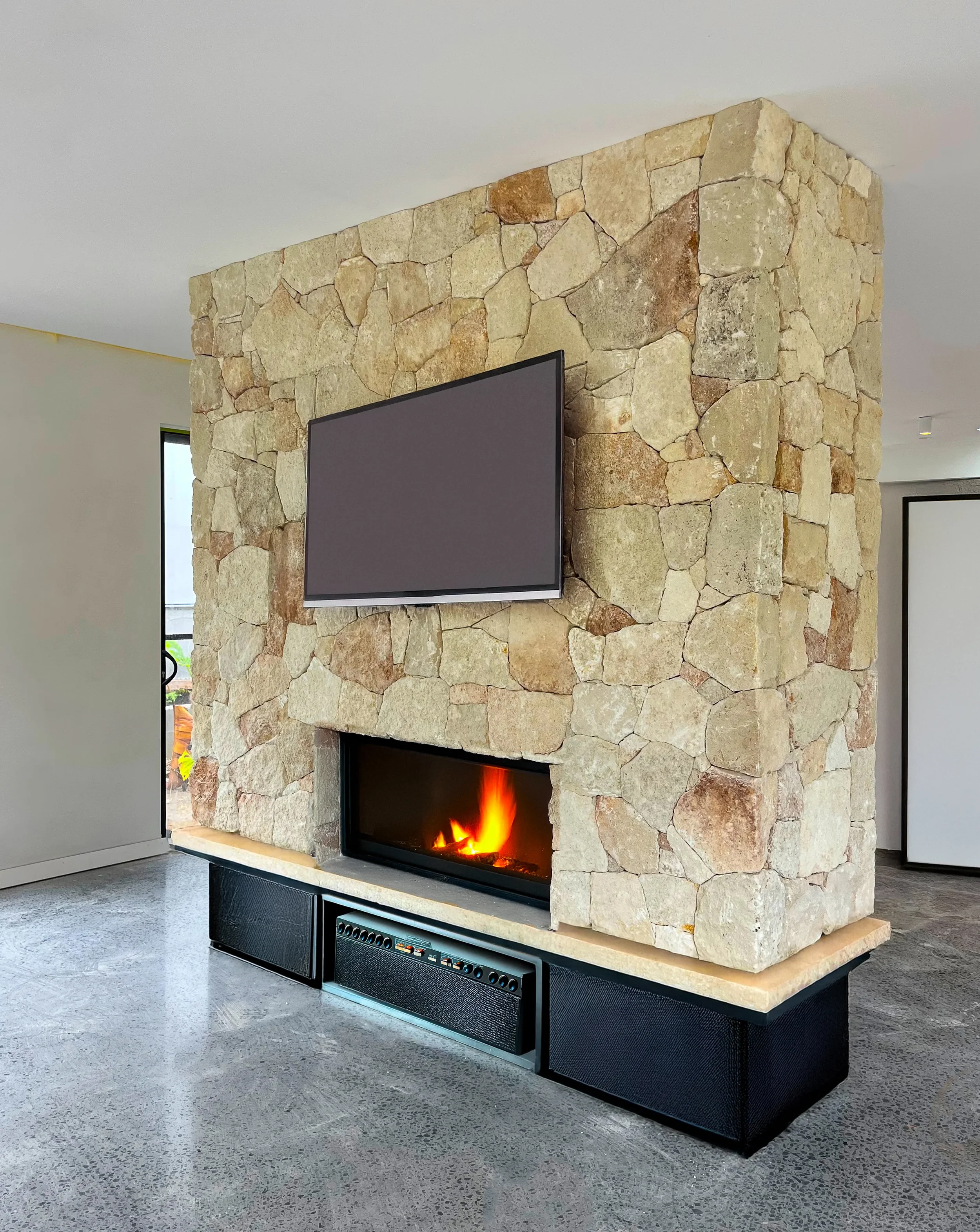
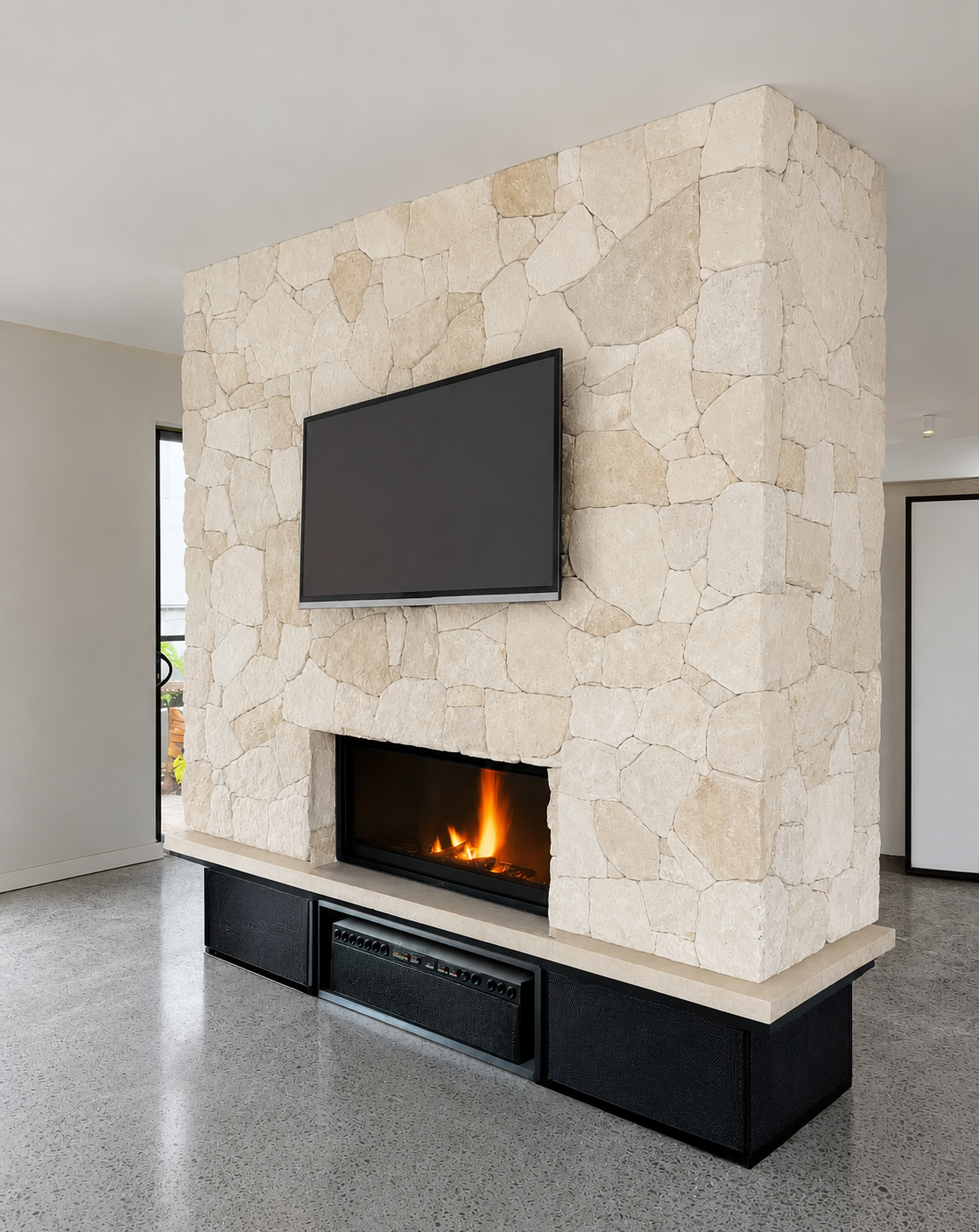
Interior stone walls and fireplaces are often more forgiving because they:
experience less moisture exposure
avoid UV degradation
typically have more stable environmental conditions
Exterior stone cladding is more demanding due to:
weather exposure
moisture movement
thermal expansion
UV exposure
drainage considerations
substrate movement
For this reason, exterior stone limewashing generally requires:
more extensive preparation
more testing
more careful product selection
greater attention to long-term breathability
What does limewashed stone actually look like?
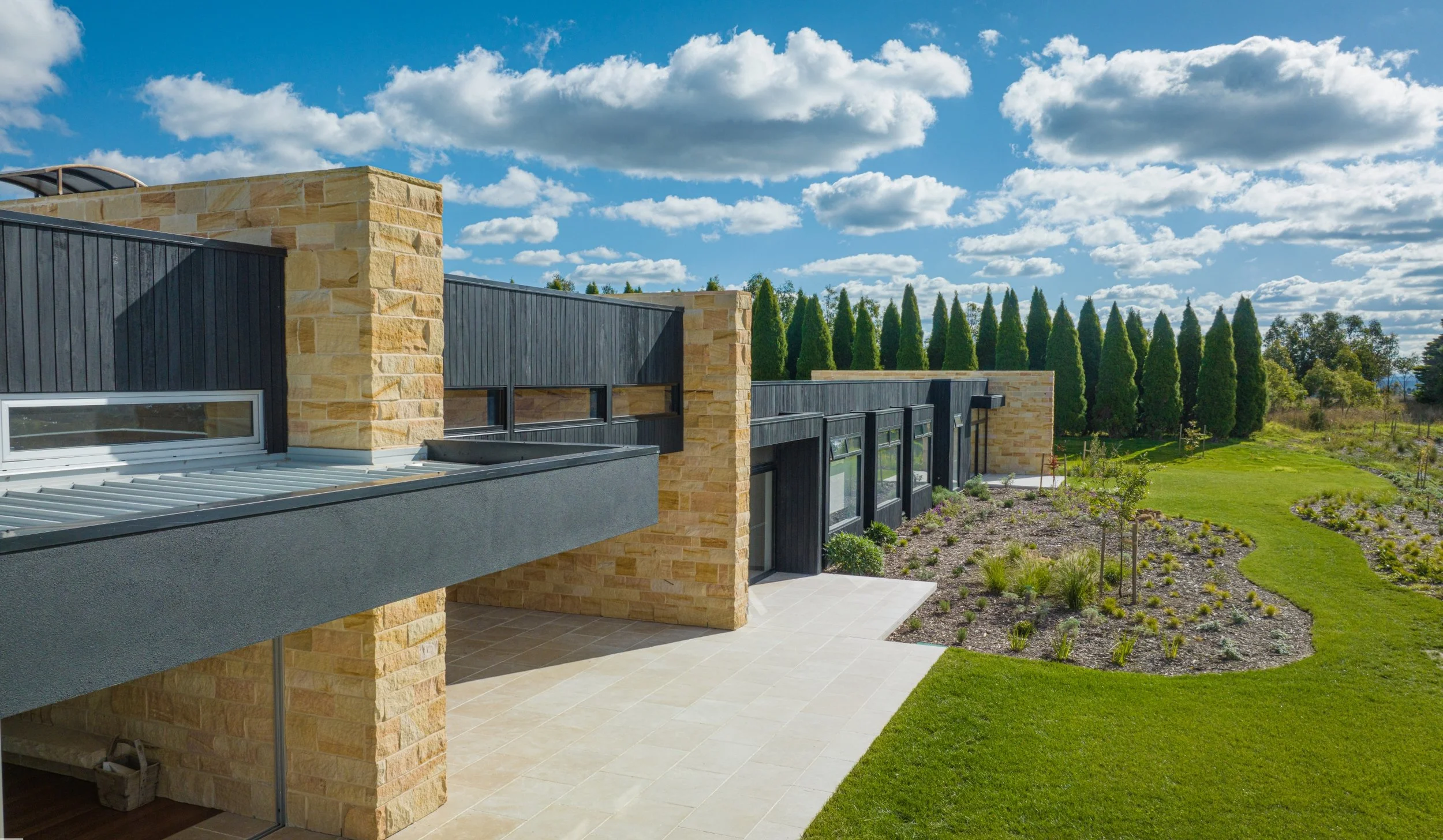
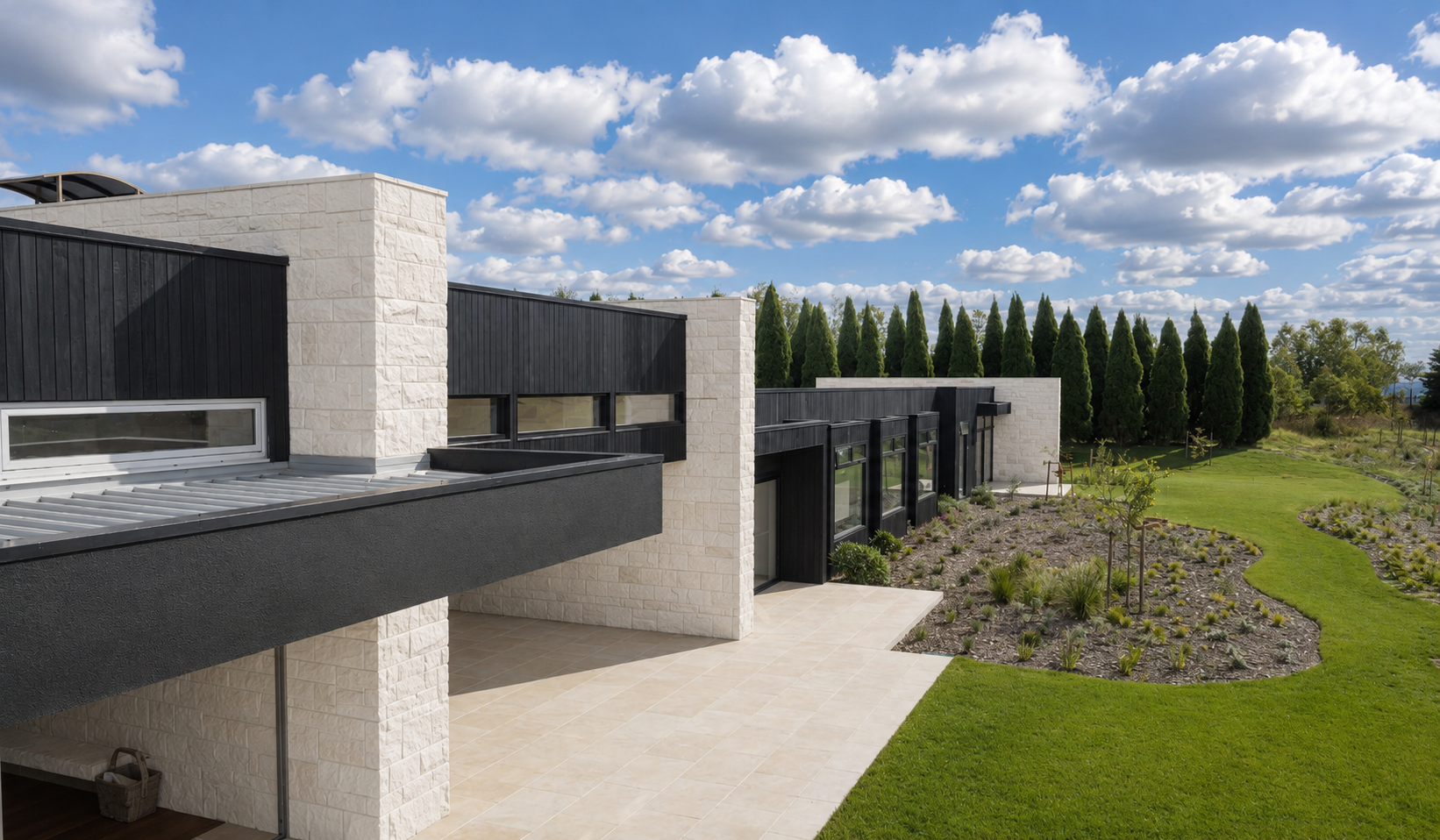
When done properly, the result is not a painted stone wall.
The goal is usually:
softened tones
reduced visual heaviness
preserved texture
natural movement
subtle variation
a more timeless architectural feel
Popular finish directions include:
warm bone tones
soft chalk whites
muted limestone-inspired finishes
weathered European textures
sandy neutral palettes
The stone still feels like stone — just significantly more refined.
Is limewashing stone always the right solution?
Not always.
In some situations:
heavily sealed substrates
non-porous coatings
failing stone systems
moisture issues
structural movement
may make traditional limewashing unsuitable without significant preparation work.
That is why proper testing and specification is essential before committing to larger projects.
A more considered way to modernise stone
One of the reasons architects and homeowners are increasingly exploring limewash is because it allows homes to evolve without losing their original material character.
Rather than completely removing the stone, the existing texture and depth can remain - while the overall presentation becomes softer, lighter and more aligned with contemporary architecture.
For many homes, particularly those with quality underlying materials, this can create a far more interesting result than simply replacing everything with flat modern finishes.
Retaining the existing stone often makes sense
Many older stone-clad homes already contain high-quality natural materials that would be extremely expensive to replace today.
Rather than removing and disposing of large quantities of existing stone, limewashing can allow the original material character to remain while significantly shifting the overall aesthetic direction of the home.
In many cases, this can:
reduce demolition and disposal requirements
avoid unnecessary material replacement
preserve the texture and depth of the original stone
achieve a more refined result with far less construction impact
Particularly on larger homes, replacing all stone cladding can quickly become a substantial project once demolition, labour, scaffolding and new material installation are considered.
For many architects and homeowners, limewashing becomes an opportunity to modernise the presentation of the home while still respecting the underlying materiality of the original architecture.
Considering limewashing stone cladding?
Every stone project is different.
The success of the final result depends heavily on:
substrate condition
existing coatings
absorbency
preparation methodology
finish direction
environmental exposure
If you are considering modernising dated stone cladding, we recommend beginning with a consultation and on-site sample testing process before determining the final specification.